Feminism in Psychology
Feminism in psychology was pioneered by Karen Horney, a psychoanalyst in the early 20th century who denounced some of Sigmund Freud’s work. She firmly asserted that male realities could not define or describe female psychology under the lack of voices and experiences from women of all ages. This, in turn, laid the foundation of feminist psychology. Feminism in psychology has addressed women’s social, political, and economic concerns for ages. Institutionally recognized during the second wave of feminism in the late 1960s and early 1970s, it is interpreted as a counteraction to male-dominated theories, encouraging personal and social transformations for improved mental health conditions of women and other genders.
Highlights
- Evolving Times
- The Mood Meter
- Inspiring Women in Psychology
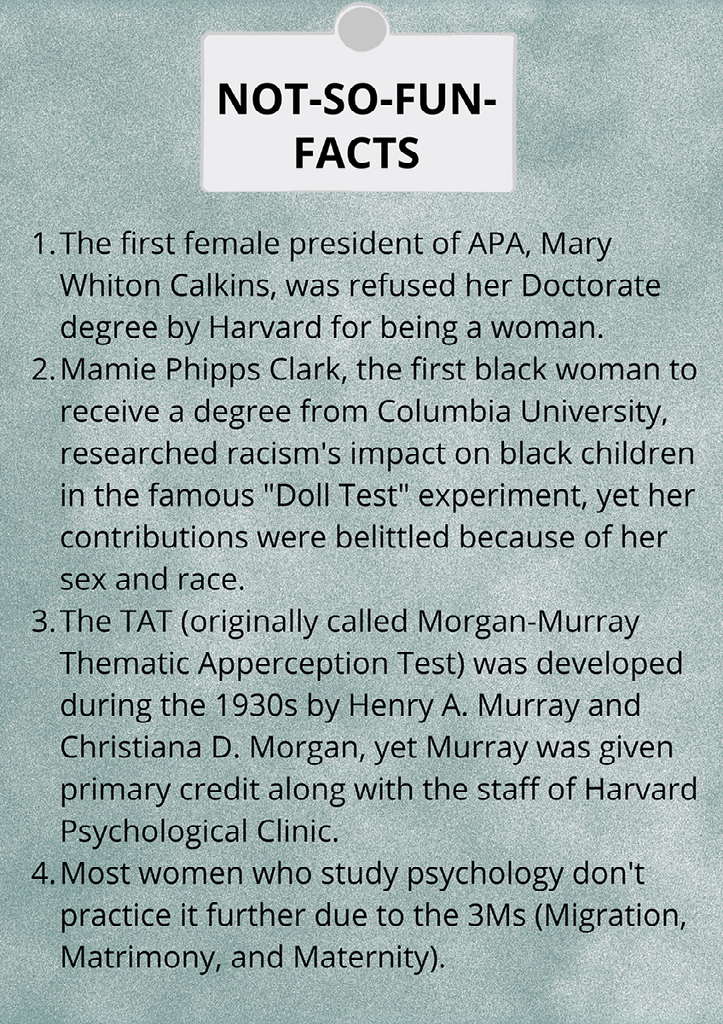
- Not-so-fun facts
- Book of the Month
- Movie of the Month
- Find The Words: Psychology Edition
- An Indian Woman in the World of Work
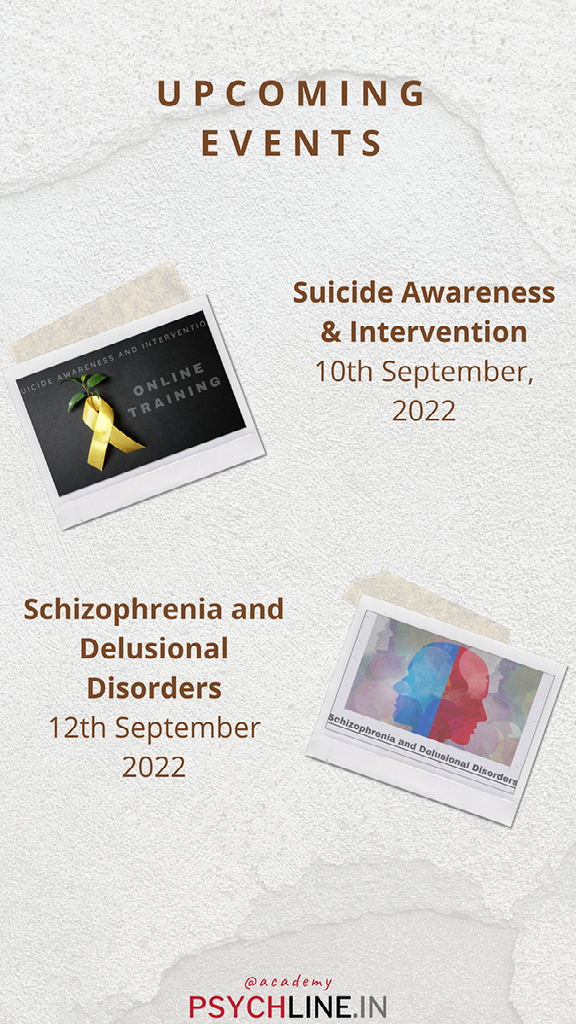
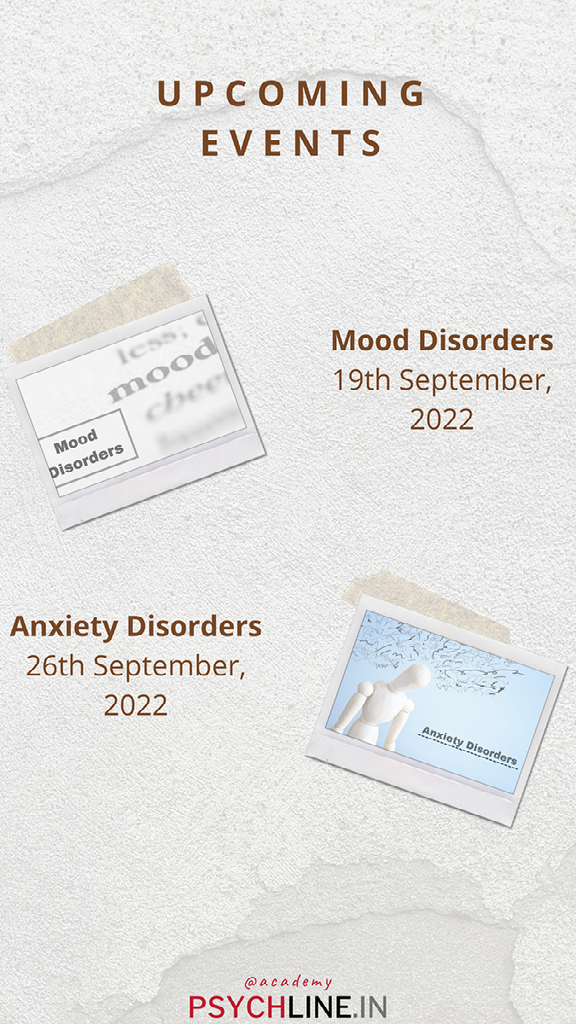
- Upcoming Workshops: PsychLine.in
- InLine Exclusive: Featured Section
Evolving Times
How Psychology is being more inclusive in terms of gender
Psychology is the study of human behavior, processes, and experiences. Yet, it falls short of the mark when it is limited to any particular aspect of humanity, including gender, race, sexual orientation, or age. Inclusivity needs to be at the core of all psychological research and application. Thankfully, with time, Psychology as a field of study has embraced the changes from a fixed axis perspective to being more open and inclusive in nature. With expanding psychological concepts, the diversity in the identities of professionals has also increased significantly. Evolving from a male-dominated field, psychology has seen a commendable rise in leading women in recent times! Having said that, researchers have found strong empirical evidence which supports that gender equality leads to more happiness- for both men and women. As compared with the earlier predominance of white men in this field, today the world witnesses active and fruitful participation of individuals from all racial backgrounds, gender, and cultures. Melanie Klein, Mary Ainsworth, Brene Brown, and Mary Whiton Calkins, to name just a few, are some of the exceptional female personalities that have helped change the shape of psychology, expanding the field into various forms of studies with understanding humans and their nature at the very core. This growing inclusivity in the domain of psychology is sure to develop further in the upcoming years!
Track Your Mood
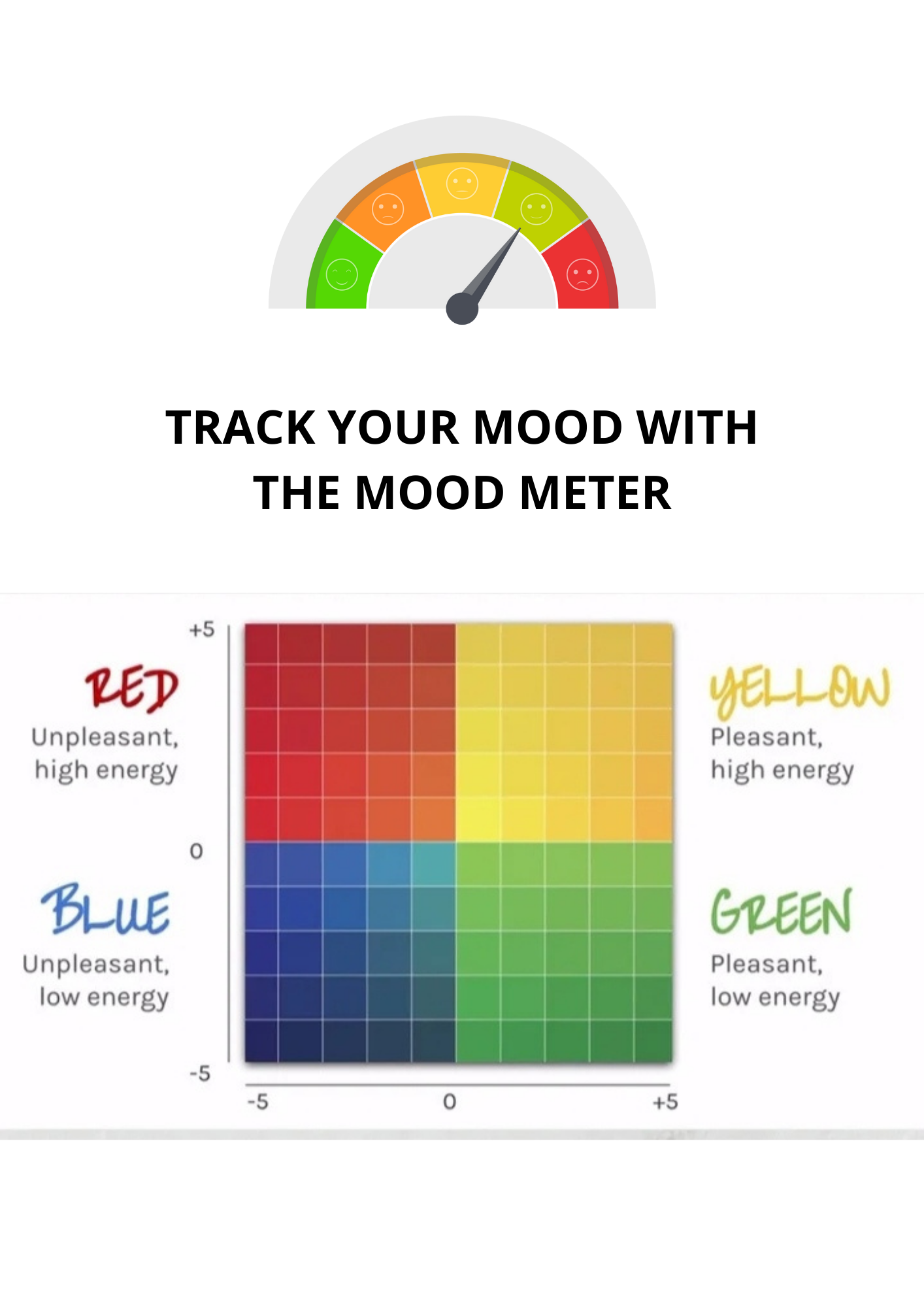
The Mood Meter
The Mood Meter is a great tool to help you identify and assess your emotions, feelings, and temperament throughout the day. It’s a great medium to break away from not-so-good feelings to better and pleasant moods. Step 1: Refer to the mood meter and plot your pleasantness and energy levels on it. Step 2: Once you pin down one that totally describes your current mood, evaluate why you are feeling so and what is influencing it. Step 3: Now decide what you can do next to feel better and then do it. Step 4: Assess your mood once again after taking action and understand what things help you be in a pleasant mood with ample energy.
Inspiring Women in Psychology
Anna Freud
The daughter of a pioneer in psychology carved out her own path and made a mark with her work, what we call today Ego Psychology. Her book, The Ego and Mechanism of Defense, defined the defense mechanisms, including denial, repression, projection, and many more, also deeply impacting the work of future psychoanalysts like Erickson. Her contributions to child psychoanalysis have been immensely valued over time.
Twinkle Khanna
The Mrs. FunnyBones author, with a Bollywood legacy destined to make it to the movies, chose to walk into authorship, writing a book with seemingly simple experiences yet reflections quite complex. She’s an Indian woman challenging ancient ideas while discovering new ones, voicing them using her pen! We do suggest you have a look at her Instagram page: @tweakindia, and be a part of her journey!
Brené Brown
From outlining the importance of less explored concepts like shame, and vulnerability to putting together a dictionary of human emotion, this author aims to map the future of emotion science. Giving her 30 minutes of your time will introduce you to 30 different life-changing ideas and thoughts, most importantly, a new perspective. If you’re a reader, we suggest you dive into her books and if you’re a visual learner, watch her speak on TedTalk or YouTube and brace yourself for the goosebumps that follow. Here’s a video you must absolutely just watch!
Book of the Month
The Palace of Illusions
- Chitra Banerjee Divakaruni
From being a princess to a wife of five husbands, this novel enchantingly portrays the great Indian epic: Mahabharata from a woman’s eyes.
Movie of the Month
Dear Zindagi
Inspired by life in general, this movie takes us through the experiences of a young girl who struggles with relationship problems. She eventually finds a better way of life after meeting a psychologist.
Find the Words: Psychology Edition
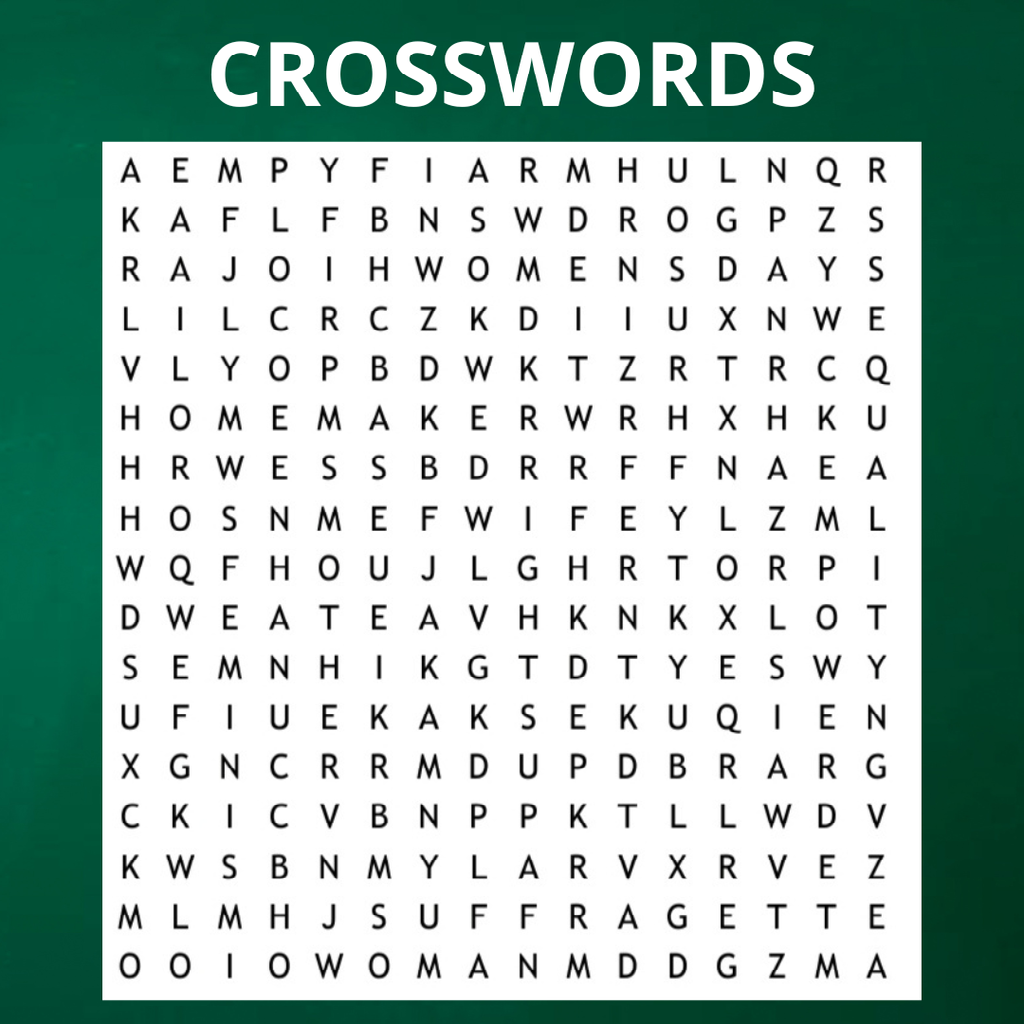

“Each time a woman stands up for herself, she stands up for all women.” — Maya Angelou
An Indian Woman in the World of Work
The Indian socio-cultural structure roots itself in patriarchal norms with systematic oppression against women, in more ways implicit than explicit. It may seem that we’ve left these behind in the previous centuries, but it is not true even for today’s working women.
When a woman steps out into the professional world, she continues to carry this baggage which presents itself with huge hurdles. Pay disparity, unequal opportunities, sexual harassment, glass ceiling, isolation, etc. are only a part of the challenges women encounter daily in the professional sphere.
Women in the workplace still do not get equal treatment in matters as standardised as their salaries. Surveys including those by IIM Ahmedabad, Randstad reported in Forbes show a 15-20% pay disparity between the earnings of men and women for the same job, with women being paid less at both entry and executive levels. If that wasn’t enough, women fight for the right of equal opportunity and promotion. Men are 42% more likely to be promoted into leadership positions than women, as concluded by the World Economic Forum Gender Gap report. It also showed a drop in representation of female leaders, from 29% at the senior level to 18% at the managerial level, revealing nothing but a lack of opportunity.
Accompanying these are general feelings of isolation and exclusion which women undoubtedly have to face, especially in professional spaces that are male dominated. One such study was conducted on women faculty in engineering colleges where it was reported that females comprised only 7% faculty members across 4 leading engineering institutes. Mixing up with male colleagues was a hindrance for them due to socio-cultural norms mandating a certain “level of distance” as well as concerns about their own safety. This also indirectly hampered their professional development in the field as networking became an issue.
Additionally, it is almost always assumed that women would not be able to put in as much effort and produce quality work as compared to men. This assumption is grounded in the notion of them carrying familial responsibilities. Often referred to as a dual burden, is a social pressure which is imposed on women, without will or consent. It is completely undue for an employer to foster assumptions regarding an employee’s abilities on the basis of gender. But it happens, against women. It may also in turn impact a woman’s self concept and aid negative attitude formation.
All these issues collectively represent a sexist voice hampering a woman’s growth in the hierarchal ladder of the organization. It is what we call the “Glass Ceiling”- this multitude of sexist influences that stop capable individuals from rising up to higher ranks only because of their sexual orientation.
Healthy work environments are nothing short of a necessity for mental well-being. Rather than posing a string of challenges, it is high time the workplaces adopt a progressive and inclusive approach to designing their culture. It is indeed shameful to see how the notion of “development” seems so hollow, even in the 21st century, when we see women still fighting for their basic rights. Integrating facets of psychology to uplift the woman’s well-being and support their growth as well as battle against these challenges is definitely something that may help. Nonetheless, the solution lies in a breakdown of these discriminatory norms and reinstitution of equity and diversity.
InLine Exclusive

Feminism in Psychology
-Sanskriti Gupta (sanskriti_0407)
Feminism. The word itself holds the power of its definition. Having quite a simple aim, for all genders to have equal rights and opportunities. Whereas Psychology? A branch that deals with the complexity of the mind that helps us accept the differences among us. Yet, we all are aware of the father of Psychology, but have you ever wondered? Who is the mother of Psychology? Sounds odd to our ears that there’s a mother of every subject and branch. Wilhelm Wundt, the father as well as Margaret Floy, the mother, contributed equally to Psychology and gave us the kickstart in the nineteenth century.
Consciously or unconsciously, humans tend to have an ingroup bias. It’s what psychology says. Humans are social beings and interact with the same kind, now that they are biologically divided into genders. These differentiations of gender tend to occur naturally and are systemic. A study shows how women are prone to depression in early adulthood while men are more susceptible to depression in middle age. Thus, we tend to accept such contrasts when it comes to understanding the human mind. Two genders can have variability without being wrong.
Sigmund Freud, leader of modern psychology with the maximum contribution to the field, gave a depth thesis of id, ego and superego. Despite this, he never talked about women in his theory. It remained controversial of his time to degrade another gender. Criticizing him, Karen Horney held the grass against Freud, calling it a product of gender power imbalance and differences. The question remains evident, “If Freud excluded women consciously or unconsciously?” Differences. These are not polarized to one gender in every category here. Feminism deals with social Psychology. What it seeks to achieve is a rightful demand for social justice. Tons of social movements not only because of any ingroup biases; but as Carl Jung talked about collective unconscious, of us connecting to our ancestors, females as a gender have been historically oppressed.
Naturally, Psychology accepts such differences; however, in terms of society and norms, the differences remain visible, with women clearly at a disadvantage in terms of roles and norms. The time is ripe for a change of social outlook in our minds. We are at a point in history where the need to come to grips with the biological is necessary as much as socio-cultural. It’s a time for evolution rather than a revolution!
Your article can be published in our newsletter’s EXCLUSIVE section with a special mention on our Instagram page! Email your articles at contact@psychline.in
PROMPT FOR SEPTEMBER (max 300 words): “CAREER PATHWAYS IN PSYCHOLOGY”