Are Women Becoming "Immoral"?
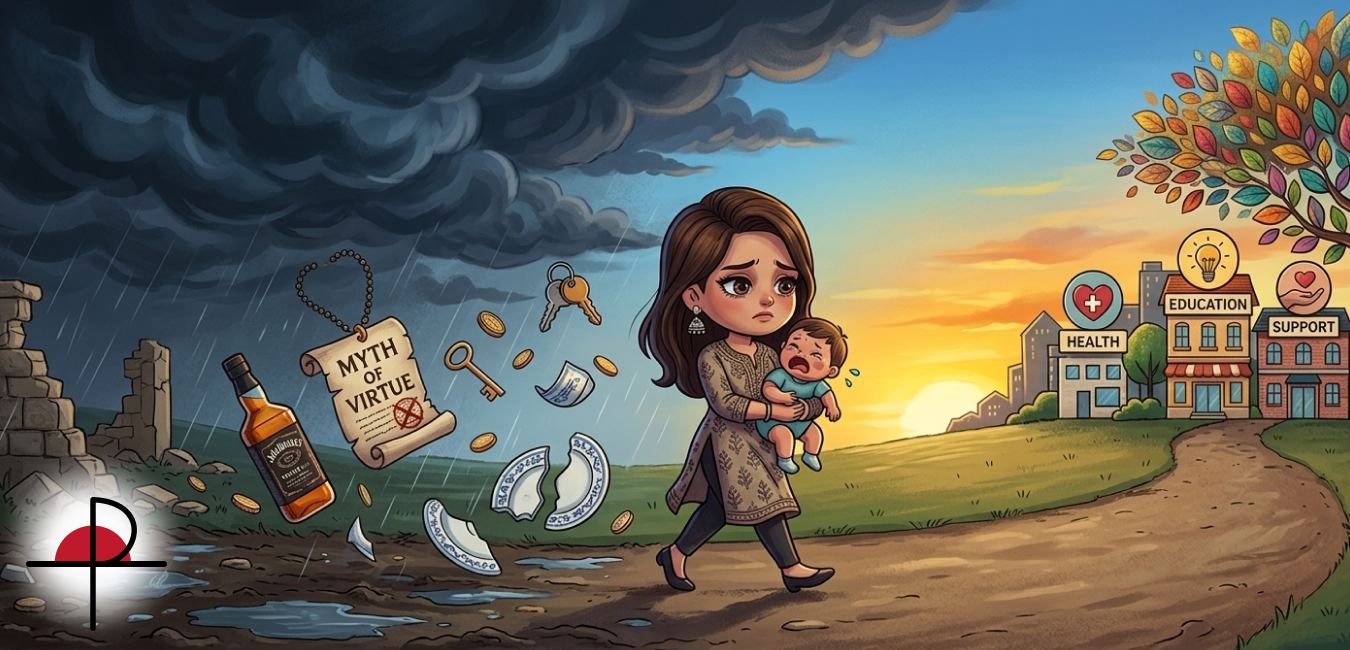
Why are women these days drinking more? Cheating more? Getting into trouble more? What’s happening?
The question gets asked a lot these days. Dont hate me for saying this, but anecdotally, I too can vouch for it, it seems to be happening much more often. But buried inside the question is an assumption worth unpacking: that women were once the moral ones, and something has gone wrong.
Let’s look at what the research actually says. And then let’s look at what it means.
First: Is It Actually Happening?
Yes, partially, and with important nuance.
On alcohol and substance use: Research consistently shows the gender gap in alcohol consumption is narrowing. A 2023 review published in European Psychiatry found an “alarming narrowing” of the gender gap in alcohol and tobacco use, particularly among adolescents. Emergency room visits for alcohol-related problems have been accelerating more rapidly in women than men over the past two decades in the United States, narrowing what was once a large gap (White, Alcohol Research: Current Reviews, 2020). Among adolescent girls specifically, some datasets now show higher rates of monthly alcohol use and binge drinking than adolescent boys, a historical reversal!
On infidelity: The gap is closing. The US General Social Survey, which has tracked this data since the 1990s, shows women’s reported infidelity rose from around 10% to approximately 15% over two decades, while men’s rates have remained relatively stable at around 20–21%. Among adults under 30, the gap has effectively vanished. A 2023 Institute for Family Studies analysis found that 11% of women and 10% of men in this age group reported extramarital sex, statistically reversing the historical pattern (IFS, 2023).
On crime: A British Journal of Criminology study and an IZA World of Labour analysis both document a gradual convergence in male and female crime rates across developed countries, with increases particularly in non-violent offences. Men still commit the overwhelming majority of crime, but the gender gap has narrowed across several categories over the past 50 years.
So yes, on measurable indicators of “traditionally male” behaviours, women’s rates are creeping toward men’s! The question is why, and what it actually means.
The Myth of the Moral Woman
Here’s the thing that the “women are becoming immoral” narrative quietly skips over: women weren’t moral because they were better people. They appeared more compliant because they were more controlled.
This isn’t a cynical observation, it’s one of the most robust findings in the sociology of gender and crime. The gender equality hypothesis, developed across decades of criminological research, argues precisely this: that the gender gap in “deviant” behaviour has never been primarily about female virtue. It’s been about female surveillance.
Women who stepped outside prescribed behaviour have historically faced consequences that men did not - social ostracism, family abandonment, loss of custody, physical violence, and in many parts of the world, legal punishment. The cost of deviation was existentially high. When the cost of deviation drops, as it does when women have financial independence, legal protections, and social support,the gap in behaviour narrows.
Sociologist Freda Adler noted as far back as 1975 (Sisters in Crime) that women’s emancipation and women’s crime rates tend to move together, not because freedom makes people worse, but because freedom removes the external controls that made conformity compulsory.
A 2016 British Journal of Criminology study put it clearly: “Women’s crime levels have been held in check, but they will increase as women move toward greater equality.” This is not a crisis. This is what freedom looks like on a population level.
The same logic applies to infidelity. Research by sociologist Pepper Schwartz at the University of Washington links the rise in female infidelity directly to economic independence: “They can afford the potential consequences of an affair, with higher incomes and more job prospects.” Women in unhappy marriages historically stayed, and behaved, because leaving was catastrophically costly. When it isn’t, the calculus changes.
What Were Women Actually Doing All Along?
This is the part that makes the “moral guardian” narrative uncomfortable: women were never as virtuous as the myth required. They were just better punished for being otherwise.
Historical records across cultures document women’s agency in sexuality, risk-taking, and transgression, records that were frequently suppressed, reframed, or simply not collected. The appearance of female compliance was partly the product of female compliance, and partly the product of what happened to women who weren’t.
In the Indian context specifically, the “pativrata” ideal- the devoted, self-sacrificing wife as the carrier of family and societal honour, has always been more prescriptive than descriptive. It was a standard women were required to perform, with real consequences for failure. It was not, and never was, an accurate portrait of what women actually felt, wanted, or did in private.
The social function of this myth was not to describe women, it was to discipline them. And the discipline worked, up to a point.
So Is This a Moral Decline? Or Just Visibility?
There’s a third explanation beyond “women are worse now” or “women are freer now” - and it’s a crucial one for mental health professionals and researchers to take seriously.
Some of this is genuine distress presenting as behaviour.
The research on women’s alcohol use is particularly revealing here. Studies show that women are significantly more likely than men to use alcohol and substances to cope with stress, anxiety, and negative emotional states (Thibaut, European Psychiatry, 2023). Men tend to drink more socially; women increasingly drink to numb.
This matters because it reframes what we’re seeing. A woman drinking heavily isn’t necessarily exercising freedom. She may be medicating an unacknowledged mental health condition in a culture that still gives her very few legitimate outlets for distress. In a society that asks women to manage careers, households, children, ageing parents, their appearance, their marriages, and their emotional labour, often simultaneously, the drinking gap narrowing isn’t only a story about liberation. It’s also a story about load.
The research on female infidelity is similar. When women report why they cheated, the most commonly cited reasons are emotional disconnection, chronic unmet needs, and a sense of invisibility in their relationship, not thrill-seeking. This is not to excuse infidelity, but to understand it: these aren’t women who stopped caring about their relationships. These are often women who cared very much and found no other way to address what was wrong.
The Pressure Cooker Question
Here’s something worth sitting with directly: Were women pushed to a limit?
For some- yes. Absolutely.
There’s a concept in sociology called strain theory (Merton, 1938; later developed by Agnew, 1992), which argues that when people are blocked from achieving culturally valued goals through legitimate means, they find illegitimate ones. Applied to gender: when a society tells women that their value lies in their virtue, their sacrifices, their restraint, and then systematically withholds power, voice, economic security, and recognition anyway, the social contract starts to feel like a trap.
Women who internalised the moral guardian role and played by its rules often found that the rules didn’t protect them. They stayed faithful and got cheated on. They stayed quiet and got overlooked. They sacrificed careers for families and got neither appreciation nor financial security. The contract was one-sided, and an increasing number of women are noticing that.
Some of what looks like “immorality” is therefore, at least in part, a refusal to keep paying into a contract that was never equitable. That doesn’t make every harmful behaviour healthy. It does make the behaviour legible, understandable, even when it’s not ideal.
What This Isn’t
It is worth being direct about one thing.
There is a version of this conversation, common in certain corners of the internet, that uses the “women are becoming immoral” framing to argue that gender equality itself is the problem. That giving women freedom was a mistake. That the solution is more control.
That argument has no research support, and it is worth naming it clearly. Countries and communities with greater gender equality consistently show better outcomes across indicators of wellbeing, for women and for men (UNDP Gender Inequality Index; WHO data). The narrowing of behavioural gaps between genders is a sign of convergence, not collapse.
The behaviours worth worrying about aren’t specifically female. Substance misuse, emotional disconnection, infidelity, and risk-taking are human problems, they were always happening at higher rates in men, and we largely decided that was acceptable, even normal. When women began doing the same things, we called it a crisis.
That’s a double standard. And it’s worth naming it as one.
Will There Be Upheaval Before Equality Arrives?
Probably some. Social transitions are rarely smooth, and the renegotiation of gender roles is one of the most profound social transitions in human history. When power is redistributed, the period of redistribution tends to be turbulent for everyone.
But the research doesn’t support a picture of women-in-chaos. It supports a picture of women in transition, developing new freedoms alongside new vulnerabilities, navigating a world that has changed faster than the support structures around them.
The behaviours we see as troubling are not evidence that equality was a mistake. They are evidence that equality is incomplete. Freedom without safety, autonomy without support, choice without resources- these are partial liberations, and partial liberations create their own kinds of pressure.
What Should We Actually Be Asking?
Rather than why are women becoming immoral, the more useful questions are:
Why are women’s rates of distress-driven behaviours — substance use, impulsive risk-taking — rising? The answer points toward mental health gaps, overload, and a culture that still doesn’t give women adequate space to express or address psychological pain.
Why is infidelity rising among younger women specifically? The answer points toward relationships that haven’t evolved at the pace society has, partnerships where the emotional and domestic labour remains unequal even as economic participation converges.
Why do we only call these things “a problem” when women do them? That question points toward a double standard so normalised it has become invisible.
And perhaps most importantly: What would it look like to build a society where the freedom to make choices comes with genuine support for making better ones? That’s not a question about controlling women. It’s a question about building institutions, mental health support, relationship education, economic equity, that serve everyone.
A Note on Morality Itself
The framing of “immorality” carries assumptions worth questioning. Morality, in its psychological sense, isn’t about conformity to a prescribed social role. It’s about how we treat each other: with care, honesty, and accountability.
By that measure, the question of whether women are more or less moral than they used to be is far less interesting than whether all of us, men, women, societies, institutions, are doing enough to create conditions where people can live with integrity. Where they don’t need to drink to cope. Where they don’t need to lie to feel seen. Where they’re not trapped in roles that cost them themselves.
That’s the moral question worth sitting with.
If you’re navigating relationship concerns, questions about your own patterns, or the emotional weight of social expectations, PsychLine offers online counselling for individuals and couples across India — with therapists who understand the complexity of gender, culture, and identity in Indian life. Book a session → | WhatsApp: +91 9993954009
Editor’s note: This article was developed using AI-assisted drafting. The research direction, source material, and editorial judgment were provided by the author.
References
- Adler, F. (1975). Sisters in Crime: The Rise of the New Female Criminal. McGraw-Hill.
- Agnew, R. (1992). Foundation for a general strain theory of crime and delinquency. Criminology, 30(1), 47–87.
- Campaniello, N. (2019). Women in crime. IZA World of Labour, 105. https://doi.org/10.15185/izawol.105
- Grönqvist, H., & Lindqvist, E. (2016). The darker side of equality? The declining gender gap in crime: Historical trends and an enhanced analysis of staggered birth cohorts. British Journal of Criminology, 56(6), 1272–1295.
- Institute for Family Studies (IFS). (2023). Infidelity analysis using General Social Survey data. IFS Research.
- Merton, R. K. (1938). Social structure and anomie. American Sociological Review, 3(5), 672–682.
- Schwartz, P. (cited in Bloomberg/NORC General Social Survey reporting). University of Washington Sociology.
- Thibaut, F. (2023). Alcohol spectrum disorders in women: A review of current data. European Psychiatry, 66(S1). Alcohol spectrum disorders in women : a review of current data | European Psychiatry | Cambridge Core
- White, A. M. (2020). Gender differences in the epidemiology of alcohol use and related harms in the United States. Alcohol Research: Current Reviews, 40(2). https://doi.org/10.35946/arcr.v40.2.01
- UNDP. (2023). Gender Inequality Index. United Nations Development Programme.